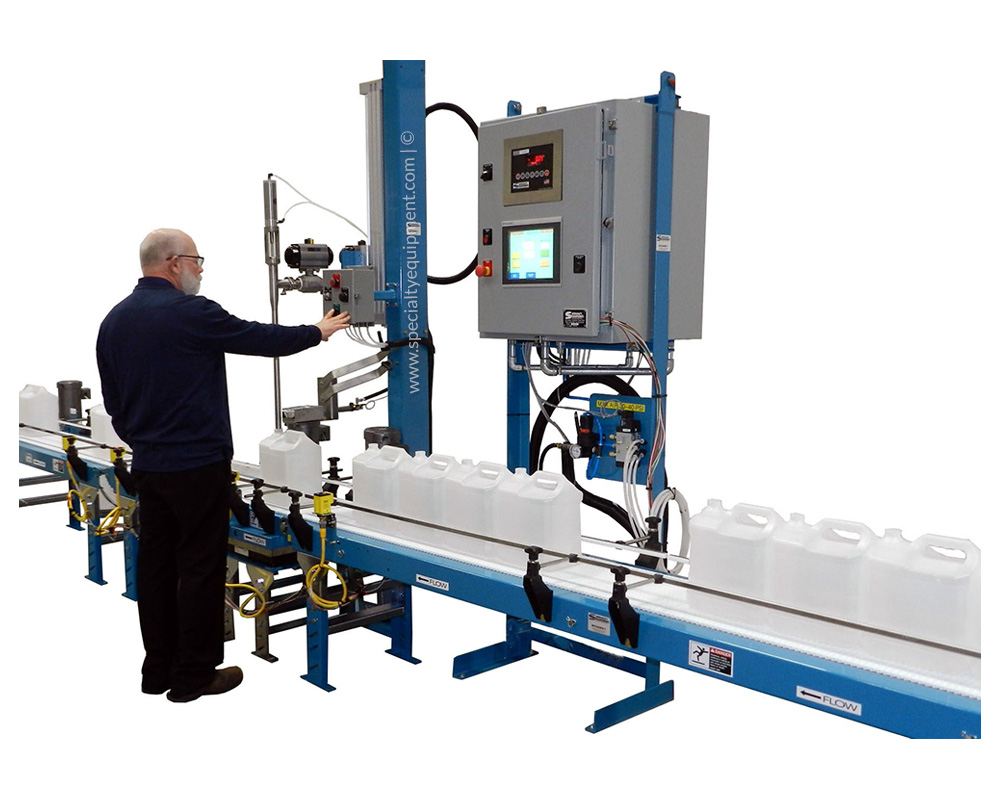
In the remarkable choreography of modern industrial manufacturing, the pail filling machine stands as a testament to humanity’s ability to automate complexity whilst maintaining extraordinary precision. These sophisticated instruments, operating at the intersection of physics and engineering, transform what was once a labour-intensive manual process into an elegant dance of measurement, flow control, and accuracy. From paint manufacturing facilities to chemical processing plants, from food production lines to lubricant blending operations, these machines quietly ensure that every container receives exactly the right amount of product, time after time, with remarkable consistency.
The Engineering Marvel Behind Bulk Container Filling
Consider the challenges inherent in filling large containers with liquids of varying viscosities. A pail, typically ranging from one gallon to seven gallons in capacity, demands both speed and precision. The technology employed addresses these challenges through sophisticated approaches tailored to specific product characteristics.
Net weight filling systems utilise precision load cells to monitor product mass in real time, adjusting flow rates to achieve accuracy levels of plus or minus 0.1 per cent. This remarkable precision proves essential in industries where regulatory compliance or customer satisfaction demands exacting standards.
Volumetric filling equipment measures liquid by volume rather than weight, employing pistons, pumps, or time-pressure relationships to deliver consistent amounts with rapid filling cycles.
Industries Transformed by Automated Pail Filling
The applications for pail filling equipment span a breathtaking array of industrial sectors. In the paint and coatings industry, where viscous products must fill containers without introducing air bubbles or causing spillage, specialised filling machines handle everything from thin lacquers to thick industrial enamels. The equipment accommodates both water-based and solvent-based formulations, each presenting unique handling requirements.
Chemical manufacturers rely on robust pail filling systems to package products ranging from benign cleaning solutions to aggressive acids and caustic materials. The machinery designed for these applications incorporates corrosion-resistant materials and safety features that protect both operators and the environment.
In the lubricants sector, filling machines manage oils of dramatically different viscosities:
- Light machine oils flow readily, requiring controlled dispensing to prevent overfilling
- Heavy gear lubricants demand heated lines and positive displacement pumps
- Greases present unique challenges, often requiring specialised filling heads
- Multi-grade motor oils must maintain temperature control throughout the filling process
The food industry employs sanitary pail fillers for products such as edible oils, sauces, condiments, and liquid food ingredients. These systems feature stainless steel construction, tool-free disassembly for cleaning, and designs that eliminate potential contamination points.
The Spectrum of Automation
Modern pail filling solutions exist along a continuum of automation sophistication. Semi-automatic systems require operator involvement to position containers and initiate filling cycles, offering flexibility and lower capital investment. An operator places the pail beneath the filling head, activates the cycle, and removes the filled container. These machines prove ideal for facilities with moderate production volumes or frequent product changeovers.
Fully automatic pail filling lines integrate multiple processes into seamless production systems. Empty containers arrive via conveyor, positioning systems align them precisely beneath filling heads, the filling cycle executes automatically, and filled pails proceed to capping and labelling stations. Some advanced systems incorporate denesting equipment that automatically separates nested pails, filling machinery, lid placement mechanisms, and palletising robots that stack completed units for shipping.
Precision Through Technology
The control systems governing contemporary pail filling machines represent marvels of electronic engineering. Programmable logic controllers coordinate all aspects of operation, whilst touchscreen interfaces allow operators to switch between products and adjust fill volumes with intuitive graphical displays.
Flow control valves enable sophisticated filling sequences. Initial high-speed flow rapidly fills the majority of the container, intermediate speed provides controlled approach to the target level, and final slow-fill mode tops off with precision, maximising throughput whilst maintaining accuracy.
The Human Element in Automated Systems
Despite remarkable automation, human expertise remains indispensable. Engineers design filling solutions tailored to specific products and production environments. Technicians calibrate systems, perform preventive maintenance, and ensure consistent operation. Operators monitor production, respond to anomalies, and maintain quality standards. This partnership between human intelligence and mechanical precision yields results neither could achieve independently.
Considerations for Selecting Filling Equipment
Choosing appropriate pail filling machinery requires careful analysis of multiple factors. Product characteristics including viscosity, temperature sensitivity, foaming tendency, and chemical properties influence equipment design. Production volumes determine whether semi-automatic or fully automatic systems prove more economical. Available floor space constrains layout options. Regulatory requirements in pharmaceutical or food applications necessitate specific design features.
Container specifications also matter significantly. Pails vary in height, diameter, handle design, and construction material. Filling equipment must accommodate these variations, sometimes within a single production run. Quick-change tooling allows operators to switch between pail sizes with minimal downtime.
Looking Forward
The evolution of pail filling technology continues, driven by demands for greater efficiency and enhanced safety. Servo-driven pumps offer unprecedented control, vision systems verify fill levels, and integration with enterprise systems enables real-time production monitoring. Advanced sensors detect potential equipment failures before they occur, facilitating predictive maintenance strategies.
Environmental considerations increasingly influence equipment design. Systems that minimise product waste and reduce energy requirements represent not merely cost savings but responsible stewardship of resources.
Conclusion
From the perspective of cosmic time, industrial automation represents a mere instant in human history, yet its impact on productivity, quality, and prosperity proves profound. The pail filling machine exemplifies this transformation, converting what was once arduous manual labour into reliable, precise, automated processes that free human workers for higher-value tasks whilst delivering consistent results that manual methods could never achieve.
 Bost Business
Leave a comment